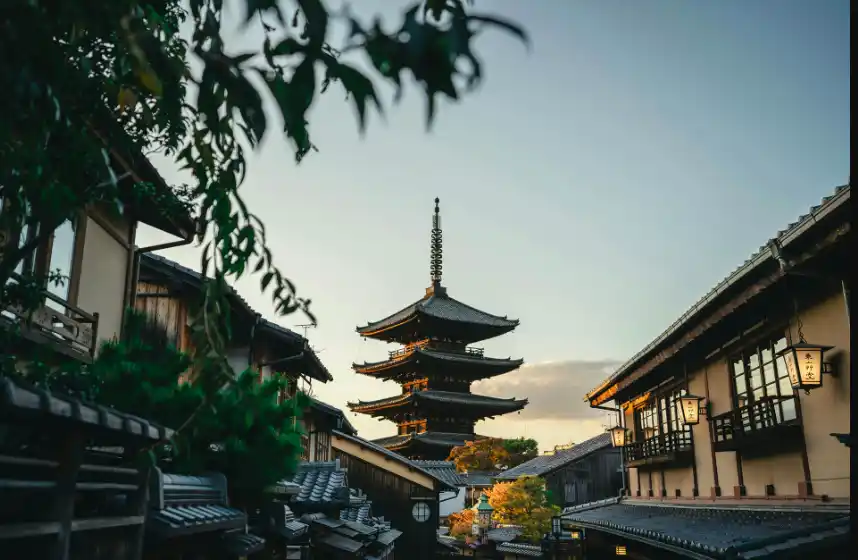
There is a version of Kyoto that most travellers never see. It hides behind the checklist sights, tucked into the private tours, the after-hours access, the terrace tables reserved by name. This is a guide to that Kyoto: the one our advisors have been arranging, refining, and re-visiting for four decades. It is written for travellers who want the icons and the intimate hours between them, arranged with taste and time.
Kyoto was Japan's imperial capital for over 1,000 years, from 794 to 1868. Home to 17 UNESCO World Heritage Sites. That is the physical scale. The emotional scale is what a great itinerary is really planning around, and it is why the small choices - which morning to visit the museum, which chef to sit down with, which local host opens which door - matter more than the headline attractions do.
01Why Kyoto, and why now
Kyoto, Japan rewards travellers who arrive with a plan and the humility to abandon it. The city is defined by Kinkaku-ji, Fushimi Inari, and the Gion geisha district, but the truer draws are the neighbourhoods that surround them, the family workshops that still keep their shutters open at odd hours, and the walks that stitch it all together. The city has more than 1,600 Buddhist temples and 400 Shinto shrines, which is the sort of fact that changes how you plan a day.
With Kyoto Travel Guide, experience has taught us to weigh this early. Our team currently sees the strongest value windows in late March, April, and November, when the weather cooperates, the light is at its most flattering, and the private touring calendar has room to breathe. Peak summer works if the group is right and the properties are booked far in advance; deep winter suits a smaller subset of guests who want the city quiet and moody. Off-season pricing can be excellent, particularly for suites and villas that hold their peak rates.
02When to go, and what it costs
The single most important booking decision is the season. Weather, crowds, festival calendars, and rate cards all move together, and Kyoto is no exception. We recommend late March, April, and November as the sweet-spot window for first-time and repeat visitors alike. Airfare from major North American gateways runs meaningfully lower on the shoulder edges of the peak and premium cabins tend to release the best award seats about 330 days out.
Currency in Kyoto, Japan is the Japanese yen, and the primary language is Japanese. Tipping norms, taxi practices, and restaurant reservation windows vary from what North American travellers expect, and getting them right up front is a large part of what turns a good trip into a graceful one. Our advisors send a briefing that covers the practical rhythm of the destination alongside the itinerary itself.
03Where to stay in Kyoto
Hotel selection in Kyoto matters more than it does in most cities, because address, aspect, and service culture vary so widely. Landmark grande dames offer the traditional experience with the widest amenity set and the most reliable service. Small design hotels give a lower-density stay closer to how residents live. Private villas and residences suit multi-generational travel, longer stays, and travellers who want a household of their own for a week or two.
As a Virtuoso member agency, Travel Wizards can layer complimentary breakfast, on-arrival amenities, and preferential room assignments across roughly 2,200 hotels worldwide, including the strongest properties in Kyoto. On average, our clients receive between $150 and $600 of on-property value per stay through Virtuoso, without paying above the property's best public rate. Read more on our /leisure page or in the /journal for property notes and recent stays.
04How to spend the days
A well-designed day in Kyoto typically starts early, with a private guide, a car, and the sort of appointment access most walk-in visitors will never see. Mid-morning turns to a food-and-people arc: a chef's demonstration, a workshop visit, a walk through a residential quarter where the day's rhythm is on display. Afternoons are gentler, with a return to the hotel for a rest, then a slow reappearance for sunset and dinner.
For Kyoto Travel Guide, the detail below is the one our advisors return to most. We plan around one signature experience per day, then two or three softer moments that keep the pace human. The signature might be a private after-hours entry, a helicopter transfer to a hard-to-reach corner of the region, or a table at a restaurant that stopped taking public bookings years ago. Everything else is arranged around it: transfers, drivers, sommeliers, translators when they help, and the small courtesies that make it all feel effortless.
The best Kyoto itineraries are the ones you almost don't notice: they simply happen, on time, in the right order, with no email traffic in between.
05How Travel Wizards plans it
On Kyoto Travel Guide, the same principle holds, with one local caveat worth stating. We start with a conversation, not a checklist. Our advisors want to hear how you travel, what you have already seen, what you are avoiding, and who is coming with you. From there we assemble a working itinerary, present two or three property options with our commentary, and refine until it feels like your trip - because it is. We handle the sourcing, the confirmations, the amenity blocks, and the day-of concierge from our office in southern California.
To read more about how we work, visit /about or /leisure. When you are ready to plan a trip, /contact us and we will match you with the advisor best suited to Kyoto.
06What we get asked most often
Clients considering Kyoto usually have the same three or four questions, so it is worth answering them briefly. How many days? For a first visit, five nights in Kyoto plus a two- or three-night regional extension. What about safety? Kyoto is comparable to other major cities in Japan and behaves like a well-mannered European or Asian capital when treated with awareness. What about the shoulder season weather? It is our favourite window because it works for both light and pace.
07A quick briefing you can screenshot
- Best months: late March, April, and November.
- Currency: Japanese yen. Language: Japanese.
- Do not miss: Kinkaku-ji, Fushimi Inari, and the Gion geisha district.
- Booking window: 6 to 12 months for peak dates, 3 to 4 for shoulder.
- Insider fact: The city has more than 1,600 Buddhist temples and 400 Shinto shrines.
For the official destination view, see the Kyoto City Official Travel Guide website: https://kyoto.travel/en/. For a deeper dive into travel styles, insurance, and the wider planning arc, read the /journal or contact your Travel Wizards advisor.
Outside reference: Kyoto City Official Travel Guide
Let a Wizard shape it for you.
Every itinerary is tailored, insider-arranged, and backed by 45 years of relationships.
Start planning